RELATE exists because we needed it for our own clinical work. We built what we wished someone had handed us — then structured it for other professionals to learn and implement.
Licensed Clinical Social Worker and clinical director for a residential treatment center serving individuals with neurodivergent presentations and complex diagnostic profiles. Rachelle has presented at national conferences on Pathological Demand Avoidance, autism spectrum support, and evidence-based treatment approaches. Her specialized training spans trauma-informed care, neuro-affirming approaches, and crisis intervention.
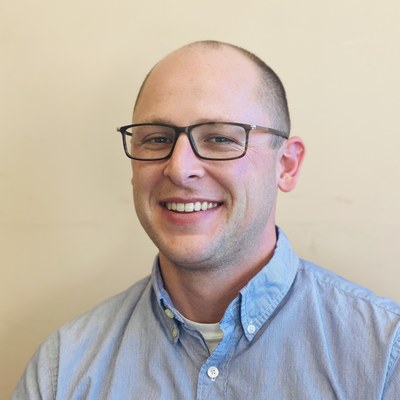
Rachelle's clinical work with PDA individuals across residential, outpatient, and family settings is the direct foundation of the RELATE framework. Her experience translating nervous system science into practical staff training drove the development of the ADAPT triage protocol and the phased implementation model that makes RELATE teachable at scale.
Clinical Mental Health Counselor with extensive experience in residential and intensive outpatient programs. Justin works with autistic individuals navigating depression, anxiety, OCD, and substance use — delivering evidence-based, neurodiversity-affirming care across complex clinical presentations.
Justin's focus on mechanism-based intervention and clinical rigor shapes RELATE's theoretical architecture. His insistence on transparent evidence positioning — honest about what the research supports and what remains clinical synthesis — is embedded throughout the framework. Justin bridges the gap between research literature and the reality of clinical practice.
The PDA field has been growing in awareness for years. Parents are learning the term. Clinicians are starting to recognize the profile. Conferences are filling up. But when a professional asks "I have a PDA client — what do I actually do?" — there hasn't been a structured answer.
RELATE is that answer. Not the only possible answer. Not the final answer. But a rigorous, mechanism-based, clinically informed framework that gives professionals concrete tools, assessment instruments, and implementation protocols — right now, while the evidence base continues to develop.
We built it from clinical experience. We refined it across hundreds of cases. And we structured it so other professionals can learn it, implement it, and track outcomes — contributing to the evidence base as they go.
The Foundational Training Manual is the root. These companion guides are the branches — extending the framework to specific audiences.
Daily implementation, school coordination, sibling dynamics, burnout prevention.
Classroom modifications, IEP language, teacher-family collaboration.
Self-directed RELATE, self-regulation, workplace navigation.
Case formulation, documentation language, supervision frameworks.